The Forgotten Institution of Dormitory Practices in Tangkhul Naga Tribe of Manipur
DOI:
https://doi.org/10.54741/SSJAR/6.2.2026.346Keywords:
tangkhul dormitory practices, importance, relevancy, tangkhul society, longshim, cultural transformation, indigenous education, social cohesionAbstract
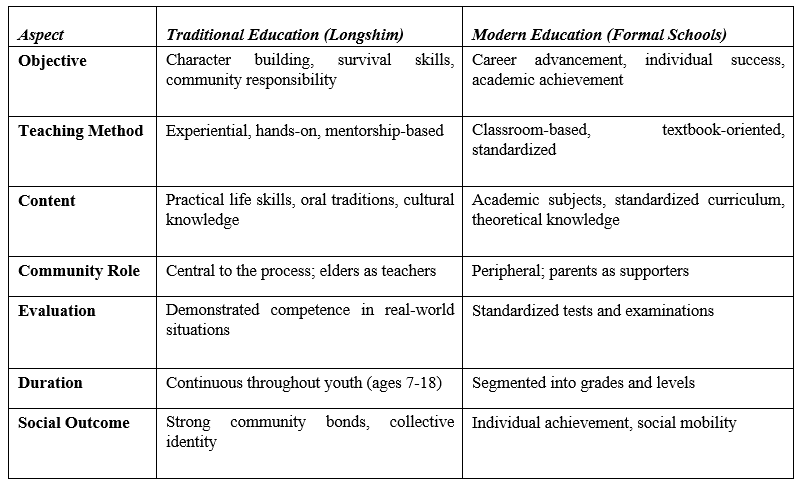
This article introspects into the social and cultural fabric of the Tangkhul Naga tribe in Manipur, India, focusing on their rich traditions and the profound impact of social changes, particularly on the forgotten institution of the Tangkhul dormitory practices—its importance and impact in contemporary society. Our modern education system, where competition has become cut-throat, often overlooks the practical lessons of life. When we examine the roles and responsibilities of youngsters in today’s world, the practical lessons that are supposed to teach life lessons like social responsibilities, etiquette, and communal values seem to be decaying at an alarming rate. For this very reason, this article offers a comprehensive examination of this critical issue. The Tangkhul, predominantly settled in hilly areas with agriculture as their primary livelihood, possess a unique blend of cultural practices passed down through generations. This article aims to provide valuable insights into the Tangkhul way of life, contributing to a deeper understanding of indigenous cultures in the region. The dormitory institution, which was once the backbone of Tangkhul Naga society, now faces challenges of relevance and sustainability. Its survival and cultural preservation depend on adapting to modern education while maintaining its essential character.
Downloads
References
Shimray, R. R. (1985). Origin and culture of Nagas. Pamleiphy Shimray.
Horam, M. (1977). Naga polity. Delhi: Low Price Publication.
Ruivah, K. (1993). Social changes among the Nagas (Tangkhul). New Delhi: Cosmo Publication.
Kaping, S. (2023). A study on traditional dormitory system of the Tangkhul Naga tribe of Manipur. Kalyana Mitra, 10.
Shimrei, C.Z. (2015). The village community among the Tangkhul Nagas of Manipur in the nineteenth century. Language in India, 15(2). https://www.languageinindia.com/feb2015/concoletangkhulcommunityfinal.pdf
Khanchuila, R. V. (2020). Gender, Longshim (Dormitory) and modern educational institution. Taylor & Francis.
Published
How to Cite
Issue
Section
License
Copyright (c) 2026 Ringmichon Shangjam

This work is licensed under a Creative Commons Attribution 4.0 International License.
Research Articles in 'Social Science Journal for Advanced Research' are Open Access articles published under the Creative Commons CC BY License Creative Commons Attribution 4.0 International License http://creativecommons.org/licenses/by/4.0/. This license allows you to share – copy and redistribute the material in any medium or format. Adapt – remix, transform, and build upon the material for any purpose, even commercially.


